

Helen Haynes offers help and hope from the driver’s seat
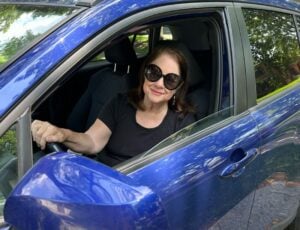
While serving as the legal representative on a hospital bioethics committee, Helen Haynes met a priest who wrote a series of essays about the “micro-humanitarianism” he encountered in his work as a hospital chaplain. The essays conveyed how a single modest act of kindness can mean everything to the person receiving it, and that concept made a big impression on her.
Haynes has spent more than forty years in law, primarily supporting policy makers seeking to improve the quality of and access to health care services. For most of her career, Haynes represented large institutions. She spent twenty years as an assistant state’s attorney in Cook County (a role she describes as “a privilege”) moving from workers’ compensation to tort litigation to medical litigation—eventually leading a specialized unit focused on health law, contracts and advisory work, primarily for Cook County’s health facilities. Along the way, she earned an LLM in health law.
Following the State’s Attorney’s Office, Haynes worked as special counsel to the Cook County Department of Public Health and when the Cook County Health and Hospitals System and its own independent board and general counsel’s office were established, she joined as associate general counsel. After retiring from Cook County, she served as Contract Administrator for the Behavioral Health Administration of the state of Washington’s Department of Social and Health Services. There she led an office that developed and administered contracts dealing with court-ordered involuntary hospitalization, competency restoration, and treatment programs for people involved in the criminal justice system.
Now Haynes supports access to healthcare services from the front seat of her car. She volunteers with the American Cancer Society’s Road to Recovery program that connects cancer patients who need transportation to appointments with volunteer drivers. Volunteers pick up clients at their homes, take them to their provider locations and drive them back home.
She worries that there are not enough volunteers in the program, particularly on the south side of the city of Chicago. As a result, Haynes tries to volunteer for rides that might not be selected by others if they require a full day or are more out-of-the way. Sometimes, her clients want to talk during their rides, leading to conversations about grandchildren, gardens, what they enjoy cooking, or what they’re reading. Sometimes they want to talk about their cancer. At other times, clients are exhausted and quiet, especially very early in the morning after a hard night, or after a session of chemotherapy. To keep the silence between them comfortable, she’ll ask if they want music, or she’ll notice something about the neighborhood they live in. “Driving for ACS is not difficult – but it does require people skills,” Haynes says.
Before each ride, she calls the client ahead of time to confirm that their ride is still needed, a habit she learned early after arriving once to find the client was sleeping and had forgotten about their appointment. Many clients have told her how much it means that she drives them, and Haynes tries to select their names the next time she sees them on the schedule because she has found that continuity matters.
Volunteering for Road to Recovery is easy, very rewarding, and far more flexible than people might assume, Haynes notes. The online system allows volunteers to have total control over when, how often, and where they drive, as well as which requests they accept.
Haynes cares for an elderly parent out-of-state for almost half the year and fits the Road to Recovery rides into her schedule. She often arranges a lunch date, visits the nearest library or does her shopping while a client receives treatment. Even if a volunteer can only drive once or twice a month, Haynes says, “The service you provide is genuinely meaningful, and more volunteers are always needed because there are ride requests that go unfulfilled.”
With the concept of micro-humanitarianism in mind, Haynes hopes that when clients get out of her car, they feel that someone cared about them that day and that they know they were not alone.
Learn more or sign up to volunteer for the Road to Recovery program.