

Mary Kay Sheehan Faces What Comes Next
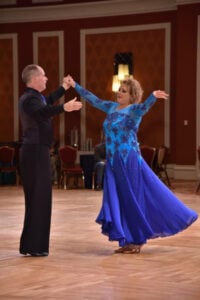
To balance the emotional weight of her work leading a hospice and palliative care organization, Mary Kay Sheehan and her husband, John, turned to an unexpected outlet: competitive ballroom dancing. What began as something entirely outside her comfort zone has become a central part of her life. Ballroom dancing requires complete presence, something she sees as deeply connected to her work. In hospice, as in dance, the moment you are in is the only one you can fully inhabit.
When she entered college, Sheehan was firmly on the path to become a physician. That path took a turn after a surgery during her freshman year, when she experienced firsthand the difference between being treated and being cared for. The doctors appeared briefly, mostly focused on the procedure itself, but the nurses stayed and helped her heal. She changed her major to nursing and has never looked back.
An early understanding that the most meaningful impact occurs at the bedside is the cornerstone of Sheehan’s four-decade career dedicated to the intimate journeys of hospice and palliative care. Working as a nurse on an oncology unit at Loyola, she was struck by something that felt as troubling as the illnesses themselves: no one talked honestly with patients and families about what was coming. “We knew patients were going to die,” she said, “but we didn’t talk about it.”
She watched families, some young couples with children, face the end of life without preparation. The problem wasn’t only the loss itself, but the uncertainty surrounding it.
Looking for a better way led Sheehan to hospice. It was a relatively new concept in American healthcare at the time, a burgeoning field that coincided with the height of the AIDS crisis in the 1980s, a time when death was often shrouded in institutional silence.
From the beginning, her philosophy has been clear. “Hospice is about living,” she said.
It’s about giving patients back a sense of control after months or years of being told where to go, what to do, and what comes next, Sheehan says. It’s also about helping families understand the process—what will happen physically, emotionally, and spiritually—so that fear is replaced with some measure of calm.
Over time, Sheehan came to see that education is one of hospice’s most powerful tools. Patients often begin to withdraw from food and drink. They may become confused. Many, in their final days, begin to see loved ones who have already died, something that can be deeply comforting, but also frightening if no one has explained it. The role of hospice, as she sees it, is to make the unfamiliar feel understood.
Sheehan recognized that if she wanted to change how hospice care was delivered more broadly, she would need to take on a different kind of role. So, she pursued an MBA at Kellogg, immersing herself in strategy, and operations—often as the only nurse and the only non-profit professional in the room.
Serving as CEO of Lightways Hospice and Serious Illness Care since 2015, Sheehan balances operational discipline with clear priorities: patients and families first. Her goal is not to only sustain the organization financially, but ensure that it delivers the kind of care she so strongly believes in.
That commitment has shaped programs that go well beyond the minimum requirements of hospice care, including extensive grief support and one of the only pediatric hospice programs in northern Illinois. Providing these services requires significant fundraising, but they reflect what Sheehan sees as essential.
Her proximity to end-of-life care has also shaped how she leads her own life. A Stage IV breast cancer survivor of fifteen years, Sheehan speaks openly about illness, loss, and the importance of saying what needs to be said. She is direct in conversations with physicians, an advocate for her family, and a leader who doesn’t avoid difficult discussions.
For her, clarity isn’t harsh. It is a form of compassion. “You can’t say ‘pass’ or ‘transition,’” she said. “You have to say ‘die.’”
What matters most to Sheehan is not the scale of the organization she leads, but the experience of the families it serves. “After their loved one has died, I hope they remember that they weren’t alone,” she said. “That they had someone to walk that journey with them, and that they felt heard and respected and loved.”